
Guide
Kitchen wrapping: the disadvantages, honestly
Yes, kitchen film has real limitations: heat, scratches, steam, and seams on corners. What's often left out: these are largely the same limitations as a new kitchen's factory finish, because it's the same material family — in a different specification. Below, we walk through each disadvantage honestly.
The same disadvantages as a new kitchen?
Think of it like a BMW and a Mercedes. Both good cars, both with their own wear points — how long they last mostly comes down to how you treat them. Kitchen film and a new kitchen's factory finish belong in the same comparison: both are a plastic layer on a wood or MDF base, from the same material family, just in a different specification. That's why film has largely the same limitations as a new kitchen — no fewer, but no more either.
Competitors would rather hide these downsides, or get defensive the moment you ask about them. We don't. We just name them, and show they're not unique to film. That honesty is exactly why customers choose us: you know what you're getting upfront, instead of finding out afterwards.
Not heat-resistant
Kitchen film isn't heat-resistant. The rule of thumb we use with customers: if you can't hold it in your hand, don't put it on the film either. Depending on brand and series, film tolerates roughly 80°C.
Worth knowing: no factory finish on a new kitchen is heat-resistant either. Genuinely heat-proof surfaces only exist as ceramic or stone — a painted, foiled, or laminated front has the same vulnerability our film does. So always use a trivet, exactly as you would on any other kitchen.
Knives leave scratches
Cut directly on a wrapped worktop, and it leaves scratches — exactly like on a standard factory worktop. Only ceramic or stone resists knife marks, and even those can scratch. Use a cutting board — the same advice that applies to any kitchen, not something specific to film.
Systematic steam
Our guarantee explicitly excludes structural steam exposure: a kettle constantly steaming under a cabinet, a dishwasher venting straight onto a front. That same exclusion applies to factory finishes — no manufacturer guarantees a front against years of daily steam hitting exactly the same spot.
In practice, after years of work, we haven't seen edges lift in those spots — how we apply the film significantly limits that risk. Exactly how, we'd rather keep to ourselves; it's know-how we've built up ourselves. Honestly, properly applied film tends to come out ahead of a factory finish on this point, not behind it.
Seams on corners
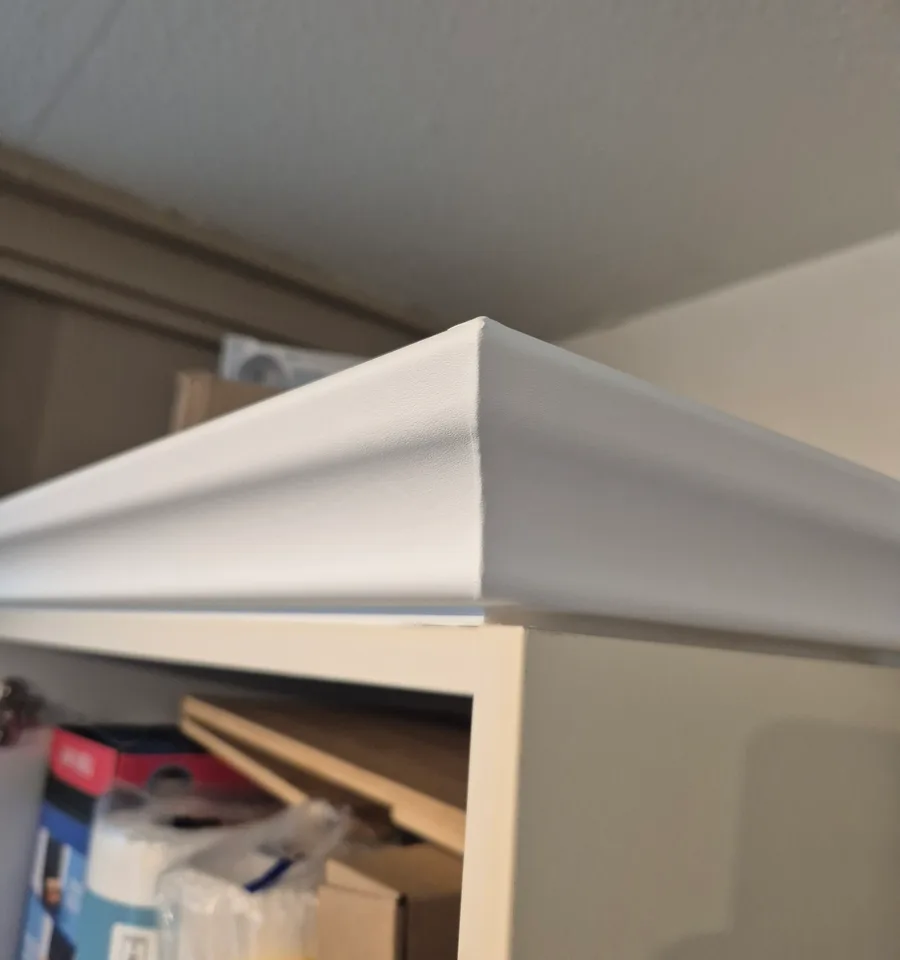
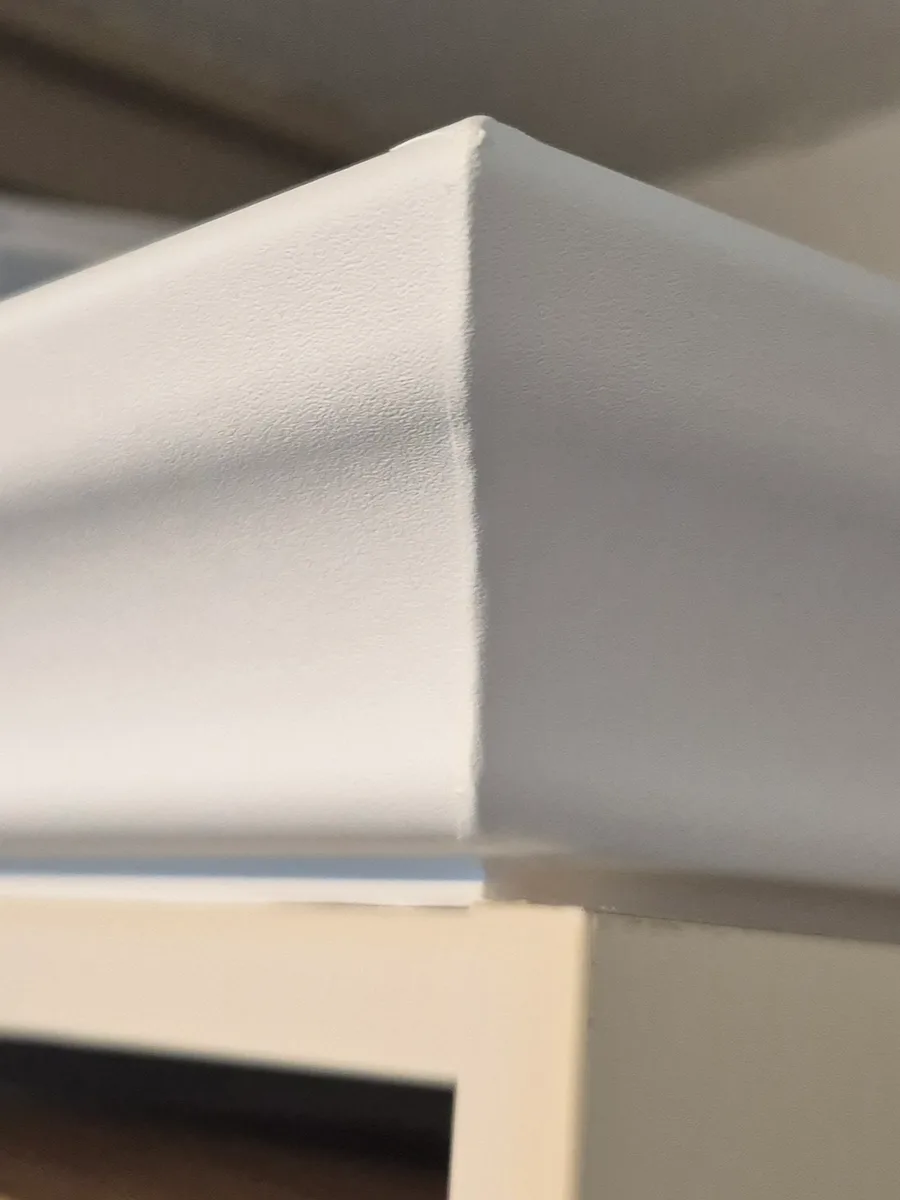
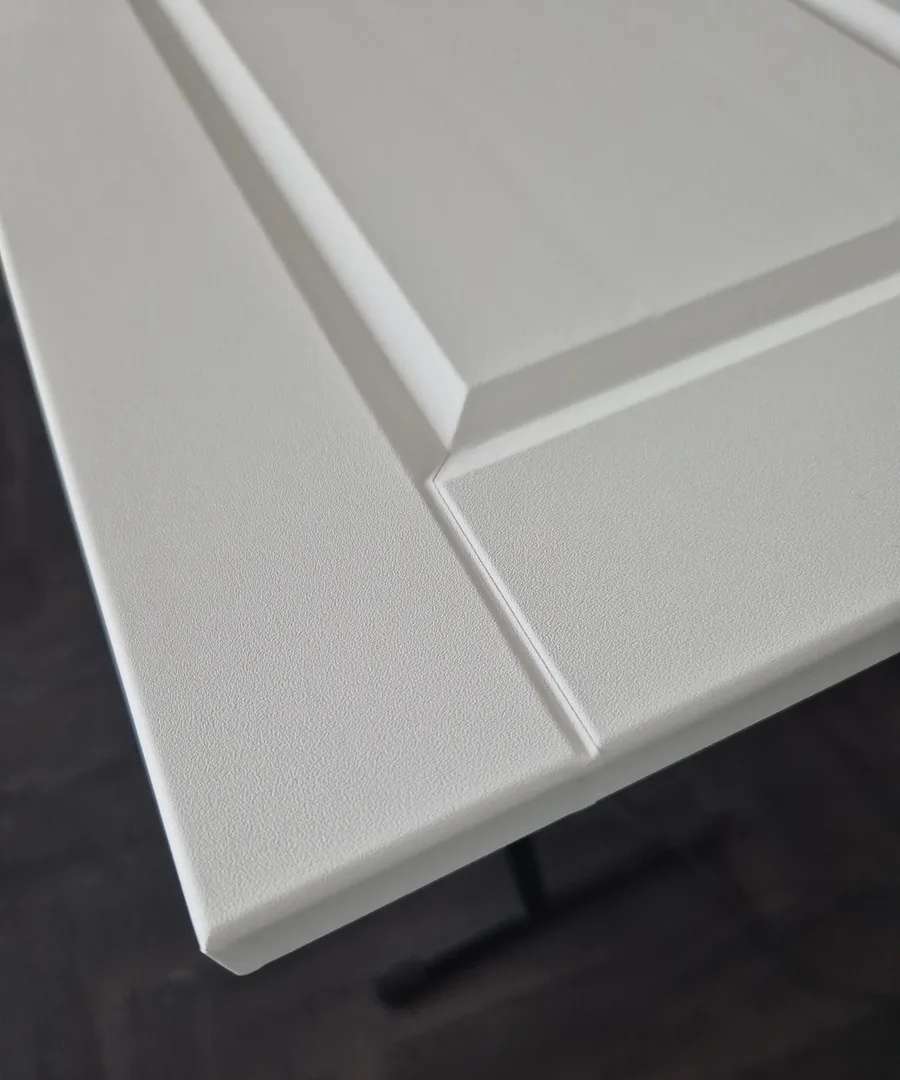
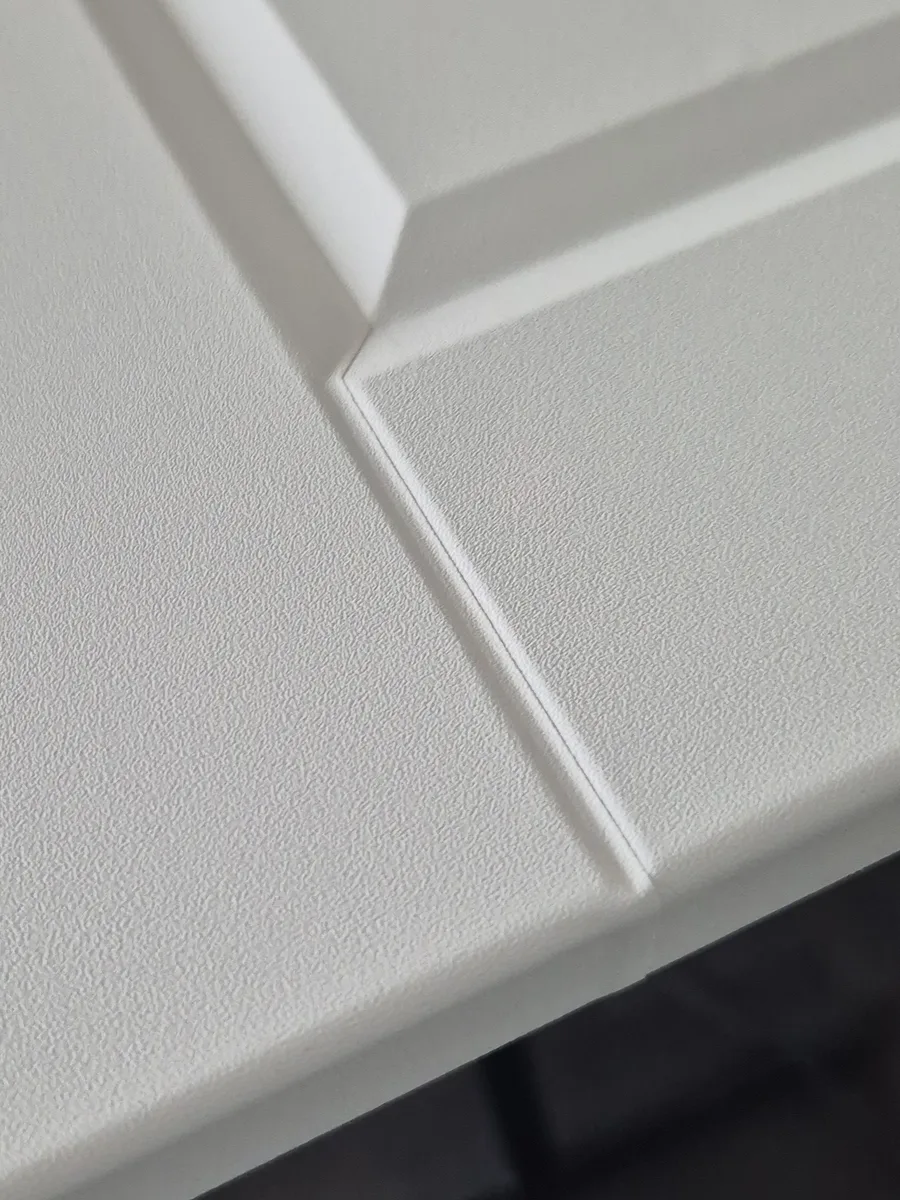
On outer corners and frame corners, seams are technically unavoidable — true for any wrapper, with any brand of film. In our work they're hairlines you have to search for, as the photos below show.
We usually wrap a piece in one go. Only when there's genuinely no alternative — a tap that can't practically be removed, or a non-flat, textured surface — is a seam needed elsewhere. We agree its placement with you in advance, so you know beforehand where it'll be.
How we handle all of this
We discuss every point above with you in advance, before we start: the heat rule, the cutting-board advice, the steam exclusion in the guarantee, and where a seam will end up if one's needed. Not as a sales pitch afterwards, but as part of the preparation — so you know exactly what you're getting beforehand, instead of finding out after the fact.
Read more about our approach on the Kitchen wrapping page. Not sure your kitchen is a good fit for wrapping? Read can my kitchen be wrapped. Renting your home? Then read removing kitchen film and rented homes to see how that affects removal and the guarantee.
Frequently asked questions
Can I put hot pans on a wrapped kitchen?
No, don't put hot pans directly on the film — use a trivet. If you can't hold something in your hand, it's too hot for the film (rule of thumb: around 80°C, depending on brand and series). The same rule applies to a new kitchen's factory finish.
Can I cut on a wrapped worktop?
No, don't cut directly on the film — use a cutting board. Just like a standard factory worktop, a knife leaves scratches; only ceramic or stone resists this, and even those can scratch.
Does the film come loose from steam?
With systematic steam exposure — for example a kettle constantly steaming under a cabinet — our guarantee explicitly excludes that, just like factory finishes. In practice, after years of work, we haven't seen edges lift in those spots, thanks to how we apply the film.
Do you see seams on a wrapped kitchen?
On outer corners and frame corners, seams are technically unavoidable, but in our work they're hairlines you have to search for. We usually wrap a piece in one go; only when there's genuinely no alternative do we agree the seam's placement with you in advance.
Are these different disadvantages than a new kitchen has?
No — they're largely the same limitations as a new kitchen's factory finish, because film is the same material family, just in a different specification.
Wondering what wrapping would cost for your kitchen?
No vague quote — calculate your own fixed price per component, including VAT and travel costs.
Calculate your fixed pricePrefer a call back?
Call me back